
Honoring the men, their memory, and their mission




DESTROYERS

Subscribe
Abele
Drexler
Porter
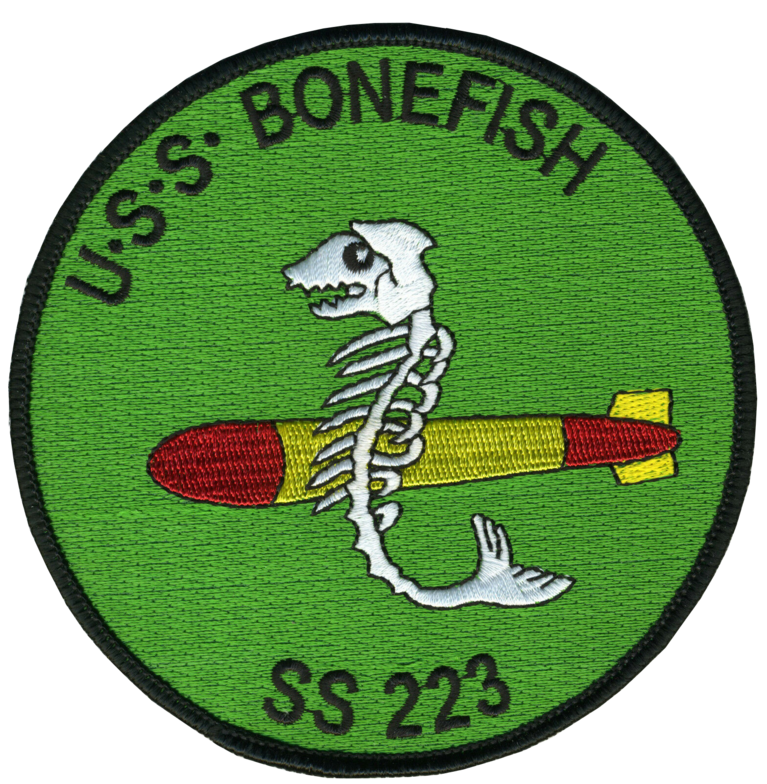

USS Bonefish (SS-223)
The Bonefish (SS-223): A Distinguished WWII Submarine
Service History and Achievements in the Pacific Theater
Commissioning and Early Operations
The Bonefish (SS-223), a Gato-class submarine, was constructed in Groton, Connecticut, and officially launched on May 7, 1943, with Lieutenant Commander Thomas W. Hogan at the helm. Entering service in May 1943, the Bonefish was deployed to combat Japanese forces during World War II. Her maiden patrol began on September 16, 1943, in the South China Sea, where she engaged a convoy of eight ships, successfully striking a freighter before diving deep to avoid a counterattack. Soon after, Bonefish launched torpedoes at the lead vessel, sinking the 9,908-ton transport Kishima Maru and damaging Chihaya Maru, eluding pursuit from escort ships by diving to safety. Early in October, Bonefish approached a third convoy, landing hits on two cargo vessels and again evading enemy retaliation. Within days, she also targeted a two-ship convoy, sinking both Isuzugawa and Teibi Maru. The first patrol concluded with Bonefish's return to Western Australia.
Subsequent Patrols and Combat Successes
In November 1943, Bonefish embarked on her second patrol in the South China Sea, entering the Flores Sea on November 28, where she attacked two enemy ships and sank Suez Maru. Escaping escort ships by diving deep, she continued operations in December, sinking Nichiryo Maru and damaging a destroyer. Bonefish participated in two additional attacks on Japanese vessels before the patrol ended.
During her third patrol near the Makassar Strait, Bonefish sank a large sailing vessel. In February 1944, she targeted a convoy of 17 ships but lost depth control, forcing an emergency maneuver. Nevertheless, she managed to land two hits on what were believed to be a Japanese oiler and a cargo ship. Later, Bonefish attacked Tonan Maru 2, scoring a hit but unable to complete the sinking due to a forced emergency dive. She returned to Fremantle on March 15.
Continued Engagements and Reconnaissance Missions
On April 13, Bonefish began her fourth patrol in the Celebes Sea, intercepting a group of four ships. She attacked and sank Tokiwa Maru before successfully landing a hit on another cargo ship the following day. Entering the Sulu Sea on May 3, she avoided a bombing run by diving and proceeded to Basilan Strait, where she attacked another convoy. Throughout this patrol, Bonefish continued to destroy enemy vessels and evade attacks. She later conducted a reconnaissance mission, gathering intelligence on Japanese aircraft and warships before returning to Australia on May 30.
The fifth patrol, under Lt. Commander Lawrence L. Edge, began on June 25, 1944, heading to the Celebes Sea. Bonefish destroyed a schooner and a small ship, later sinking a cargo vessel and a sampan with eight torpedoes. She sank Kokuyo Maru with six torpedoes and damaged a tanker near Sibutu and Tawitawi. The patrol ended with her return to Australia on August 13.
Final Patrols and Ultimate Sacrifice
Bonefish's sixth patrol started on September 5, headed for the Sibuyan Sea. Little action occurred until September 24 off Mindoro, where she sank the 2,068-ton Anjoy Maru after a confrontation with a tanker and destroyers. Bonefish joined Flasher and Lapon for coordinated attacks at Cape Balinao, hitting three cargo ships. She later sank Fushimi Maru and rescued two naval aviators, then proceeded to Pearl Harbor and San Francisco for repairs and overhaul.
After repairs, Bonefish returned to Pearl Harbor, setting sail from Guam to the East China Sea in April 1945 for her seventh patrol. Although less eventful, she attempted to sink a patrol vessel and rescued two Japanese aviators. The sub completed a special mission before returning to Guam in May 1945.
Following a refit, Bonefish joined Tunny (SS-282) and Skate (SS-305) as "Pierce’s Pole Cats," named after Commander George E. Pierce, and was equipped with a new mine-detection device. Ordered to the Sea of Japan to cut off Japanese supply lines, she successfully patrolled off Honshu and was reported to have sunk Oshikayama Maru. During a planned rendezvous in June, Bonefish failed to appear and was presumed lost after over a month of silence. Japanese records indicated that the 5,488-ton Konzan Maru was sunk in Toyama Wan on June 18, and a subsequent counterattack revealed debris and oil slicks, suggesting Bonefish’s fate. Eighty-five crew members were lost in the line of duty.
Legacy and Honors
Throughout her service, Bonefish sank a total of 31 enemy vessels and damaged seven others. The submarine also performed valuable reconnaissance missions and captured two Japanese prisoners from downed planes. For her distinguished record, Bonefish received the Navy Unit Commendation medal for the period covering her first and third through sixth patrols.

