
1941 – 1945
Honoring the men, their memory, and their mission
The Lost 52 Project is a long-term exploration and underwater archaeology project documenting and preserving the story of the 52 U.S. submarines lost in World War II.
The 52
Lost 52 Project discoveries
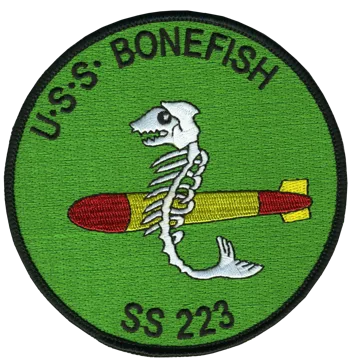
Latest discovery · May 2026
USS Bonefish (SS-223)
Summary of the find goes here: where she was lost, how she was located, and what the survey recorded. Text to come from the Bonefish and Bonefish Expedition pages.
Discoveries
Each boat has her own page: the find, the boat, the crew, the expedition, the families.
Cold War Subs
Additional discoveries
A project-made destroyer emblem stands in until ship insignia are supplied.
“These guys can do what they set out to do, finding more of the ‘Lost 52’ is just a matter of time.”
Mission
Our mission objective is to provide the fullest possible documentation and accounting of the locations for our missing WWII Navy sailors, their families, and the nation.
In consideration of family expectations and the sensitive and personal nature of these final resting places, we do not disclose ongoing expedition plans. Discoveries are announced only once expeditions are completed and data is verified.
Support the search
Lost 52 Project is a 501(c)3 Ocean Outreach project. Donate and Store link to oceanoutreach.org.
The roll
The 52
Fifty-two U.S. Navy submarines were lost between 1941 and 1945. Fifteen have been located so far. Boats found by the project carry its emblem and the label “Lost 52 Project discovery”.
The Submarine Force in the Pacific
When the Pacific war began in December 1941, much of the American battle fleet lay damaged at Pearl Harbor. The submarines were among the few forces able to carry the fight to the enemy at once. They did so for the next three and a half years, patrolling alone or in small groups, thousands of miles from home and deep inside waters Japan controlled.
The Submarine Force was never large. It made up less than two percent of the U.S. Navy, yet its boats sank more than half of all the Japanese shipping lost in the war, along with a significant share of the Imperial Navy’s warships. By cutting the sea lanes that carried oil, food and raw materials to the home islands, and troops and supplies to distant garrisons, the submarines did as much as any force to bring the war to an end. They also scouted enemy fleets, landed and supplied forces behind the lines, and pulled hundreds of downed airmen from the sea.
That record came at a heavy price. Fifty-two submarines were lost, and with them 3,506 submariners, 375 officers and 3,131 enlisted men. That is about one in five of those who made war patrols, the highest loss rate of any branch of the American armed forces. Every one of them was a volunteer. No man was ordered into submarines; each asked for the duty knowing its risks, and earned his place aboard. Most have no grave but the sea. They are said to be on eternal patrol, and this roll is kept so that their boats, their names and their service are not forgotten.
Beyond the 52
Cold War Submarines4
These boats are not part of the 52 lost in World War II. Four U.S. submarines were lost during the Cold War and are remembered here, in order of loss. USS Stickleback was found by the Lost 52 Project in August 2019.
Discoveries
Found and documented
Every vessel the Lost 52 Project has found has her own page. Each one carries the project emblem and the label “Lost 52 Project discovery”.
 Lost 52 Project discoveries7
Submarines of the 52 lost in World War II. Newest first.
Cold War Subs1
USS Stickleback, found by the Lost 52 Project in August 2019. The other Cold War losses are listed on The 52 page.
Additional Discoveries4
Three U.S. Navy destroyers and the submarine S-35, found and documented by the project.
On this page
Coming soon in 2026
The crew
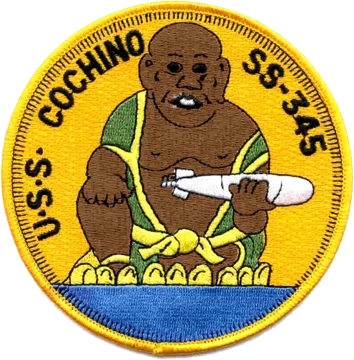
Cold War submarine · not one of the 52
USS Cochino (SS-345)
Lost off Norway in an Arctic storm, 26 August 1949
- Class
- Balao-class submarine, converted to GUPPY II with snorkel
- Builder
- Electric Boat Company, Groton, Connecticut
- Commissioned
- 25 August 1945
- Lost
- 26 August 1949
- Where
- Off Norway, 71°35′N 23°35′E
- Lives lost
- Seven: one aboard Cochino, six from USS Tusk
In memory
The seven men lost
Every man of Cochino’s crew was brought off alive. The sea took one civilian riding the boat and six sailors of USS Tusk (SS-426), who were swept overboard while trying to save her.
Rates and home towns still to be added.
The sinking
Cochino was four years old and newly modernized. She had come out of her builder’s yard in February 1949 as a GUPPY boat, fitted with a snorkel and larger batteries, and that July she left New London for her first deployment to European waters. After calls at Derry in Northern Ireland and Portsmouth in England, she put to sea on 12 August for operations above the Arctic Circle in the Barents Sea, in company with USS Tusk.
On 25 August 1949 the two boats ran into a violent polar storm off Norway. Heavy seas pounded Cochino’s snorkel and jolted the boat so hard that an electrical fire broke out, followed by a battery explosion and the release of hydrogen gas.
For fourteen hours, in wretched weather, the men of Cochino and Tusk fought to save her. A second battery explosion on 26 August settled the matter, and the order was given to abandon ship. The crew crossed to Tusk by a dangerous rope transfer, and the empty Cochino sank.
Cochino’s one fatality was Robert W. Philo, a civilian technician from the Bureau of Ships, swept overboard by an icy wave. Tusk lost six of her own men the same way during the rescue.
Cochino was stricken from the List of Naval Vessels on 27 October 1949. She is one of four U.S. Navy submarines lost since the end of World War II, with USS Stickleback, USS Thresher and USS Scorpion.
Sources: Wikipedia, USS Cochino, which draws on the Naval History and Heritage Command ship history. Draft text, awaiting sign-off.
Timeline
- 13 April 1944: laid down at Groton
- 20 April 1945: launched
- 25 August 1945: commissioned
- 4 February 1949: GUPPY conversion completed
- 12 August 1949: leaves Portsmouth for the Barents Sea
- 25 August 1949: fire and first battery explosion
- 26 August 1949: second explosion; abandoned and sunk
- 27 October 1949: stricken from the Navy list
Named for
The cochino, a triggerfish found in the Atlantic.
Science
Underwater 4D modeling
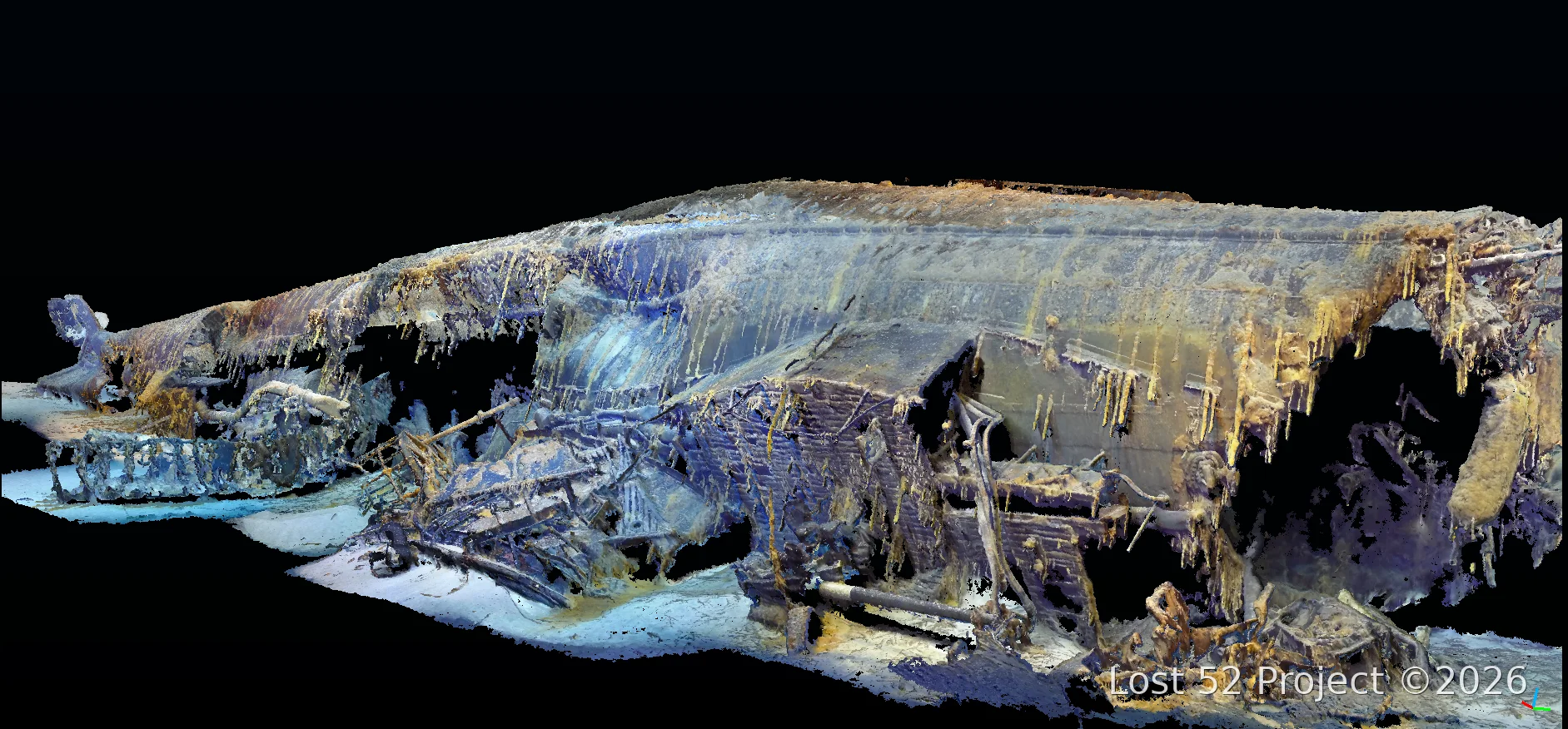
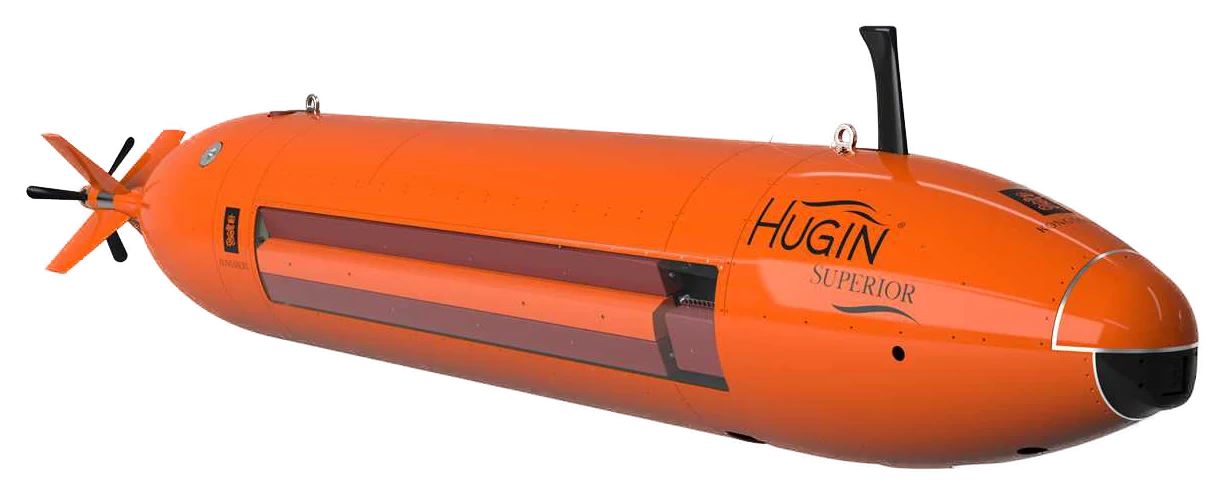
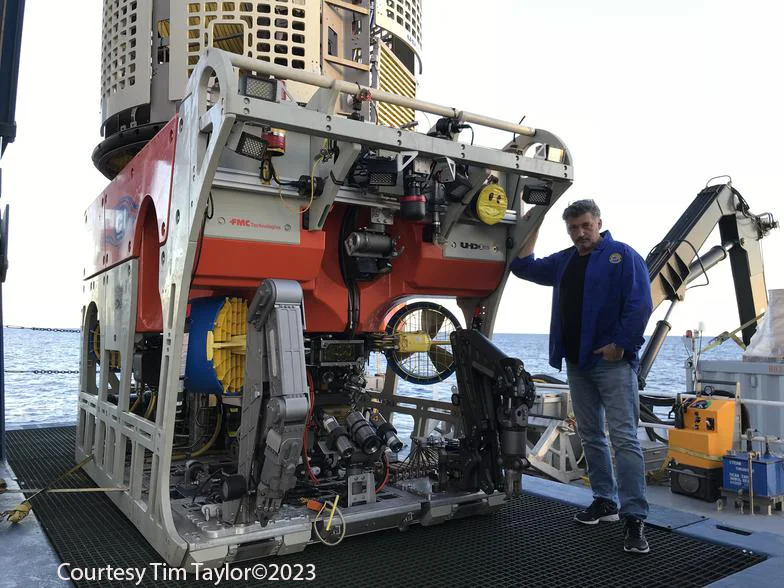
The project builds complete three-dimensional views of submerged WWII wrecks and the ecosystems around them, where earlier methods produced only two-dimensional records. Surveys are non-invasive: the sites are documented, never disturbed.
The current page runs about 1,200 words on survey equipment, protocols and instruments. It splits cleanly into the three parts listed at right.
Sections
- Autonomous underwater vehicles (AUV)
- Remotely operated vehicles (ROV)
- Methods and scientific instruments
Watch
4D Underwater Modeling
Media
Video, photos, press and family stories
Choose a category. Every item opens the live film, article or page.
Media
Video
All 26 films from the current Video Gallery, in the same order. Each one opens on YouTube in a new tab.
Titles are as supplied for films 1 to 25. Film 26 still needs a title. Preview frames will appear once the site is on its new host. Source: Video Gallery on the current site.
Media
Photos
Wreck surveys, 3D models and sonar images, by vessel. Select a photo to enlarge it.
These are the larger images already collected for this mockup. The 116 photos on the current Photo Gallery are small squares online and join this page as their originals arrive.
Media
Press
Coverage of the discoveries from 2010 to 2026, newest first. Each story opens at its source in a new tab.
Two links on the current Press page are broken (the 2017 and 2019 USS S-28 stories); they are repaired here. One current link reads “Cold War USS Grayback” but leads to the USS Stickleback story; it is labelled Stickleback here. Source: Press page on the current site.
Media
Families and press
Family stories, films and press coverage, gathered from each vessel’s page on the current site and sorted by the boat or ship the family member served on.
Jump to a vessel
Films open on YouTube and stories open at their source, each in a new tab. Draft page: names, stations and film titles need sign-off.
The team
Lost 52 Expedition Tech Team
Our team of explorers is dedicated to preserving and telling the story of WWII submarines and submariners. Our quest is to provide the fullest possible accounting of our missing WWII Navy sailors for their families and the nation.
Expedition team
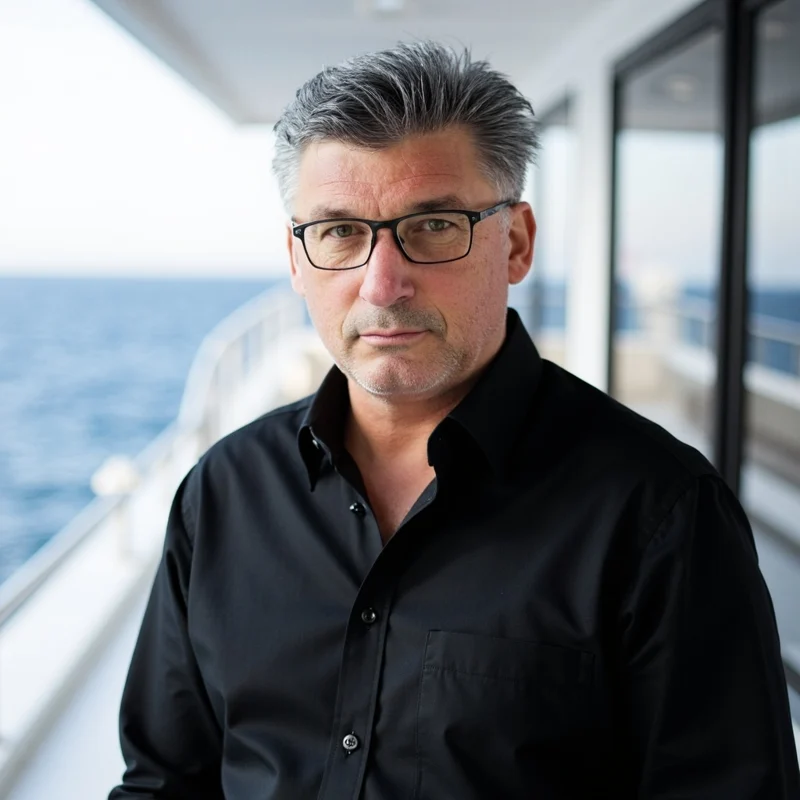
Tim Taylor
Founder and expedition leader
Tim Taylor is an ocean explorer and entrepreneur, and the founder of the nonprofit Ocean Outreach and the Lost 52 Project. He has spent more than thirty years in the marine industry working with innovative diving technologies and leading underwater expeditions.
His work with scientists, archaeologists and oceanographers led to the discovery of numerous reefs, among them Sherwood Forest Reef, the centerpiece of the Tortugas Ecological Reserve, and Pulley Ridge, the deepest hermatypic coral reef in the world. He has run shark research projects, supported underwater archaeological discoveries in Cuba and hosted National Geographic expeditions, working alongside Dr. Sylvia Earle, Dr. Eugenie Clark, Franck Goddio, Dr. Sue Hendrickson, Wes Skiles and Philippe Cousteau, and with institutions including the University of Miami, Mote Marine Lab, Scripps, NOAA and the U.S. Navy.
From 2008 to 2012 he pioneered long-range deployment of a small expert team to map the deep ocean, charting 6,173 square kilometres of remote sea floor at 1,500 metres with a state-of-the-art AUV.
In 2021 he received the U.S. Navy’s highest civilian award, the Distinguished Public Service Medal, for his discoveries. He is a Fellow of the Royal Geographical Society and of the Explorers Club, which gave him its Citation of Merit in 2008. He also holds the International Navy League’s “Man of the Sea” award, the Brazilian Navy Honorary Submariner Medal and the Brazilian Navy League Medal of Honor for his work on USS R-12.
He is CEO and President of Tiburon Subsea Inc., an autonomous underwater vehicle (AUV) technology company that develops AUV technology and specializes in autonomous underwater robotic operations. He holds patents in cutting-edge AUV control technology.
He appears regularly as an ocean technology and robotics expert on CNN, NBC, BBC, CBC, FOX, CNBC and MSNBC.
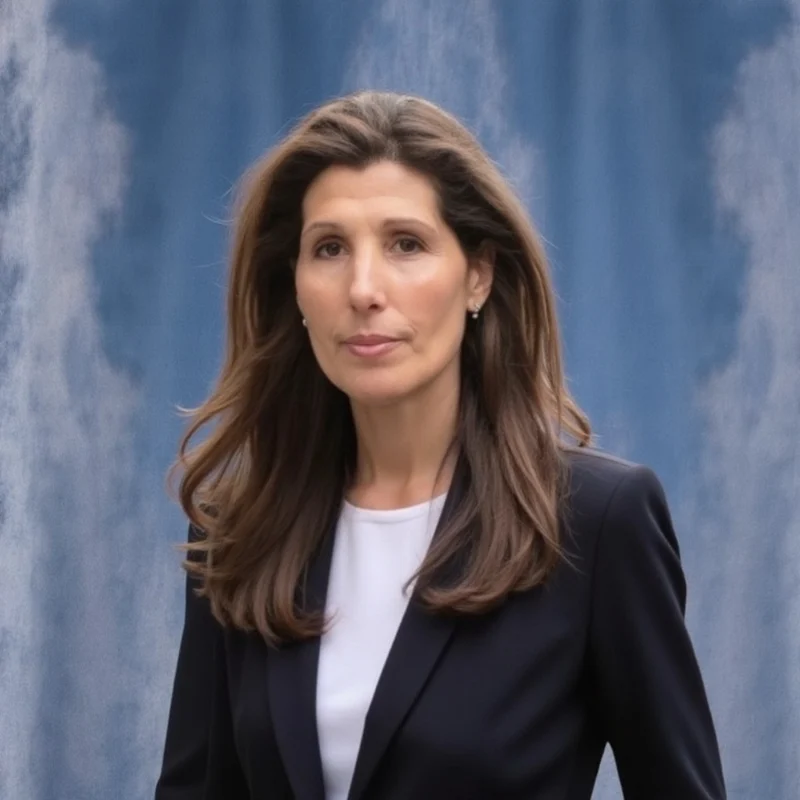
Christine Dennison
Expedition logistics and operations
Christine Dennison is the co-founder and President of Mad Dog Expeditions, an internationally recognized technical scuba diving, adventure and exploration company based in New York City. She has worked on several expeditions using underwater robotics and brings years of experience with an international clientele and the media.
She is a Fellow of the Explorers Club and of the Royal Geographical Society, and supports marine and wildlife conservation through nonprofit work. For her role in the discovery and exploration of USS R-12, where two Brazilian officers are entombed, she was awarded the Brazilian Navy League’s Medal of Honor. In 2017 the International Federation of Maritime and Naval Leagues and Associations awarded her the FIDALMAR Medal in its silver category for her maritime vocation and her service to the maritime heritage of humanity.
A native New Yorker, she appears regularly on CNN, FOX, CNBC, BBC, SKY and CBC as an expert in ocean technology, logistics and expeditions.
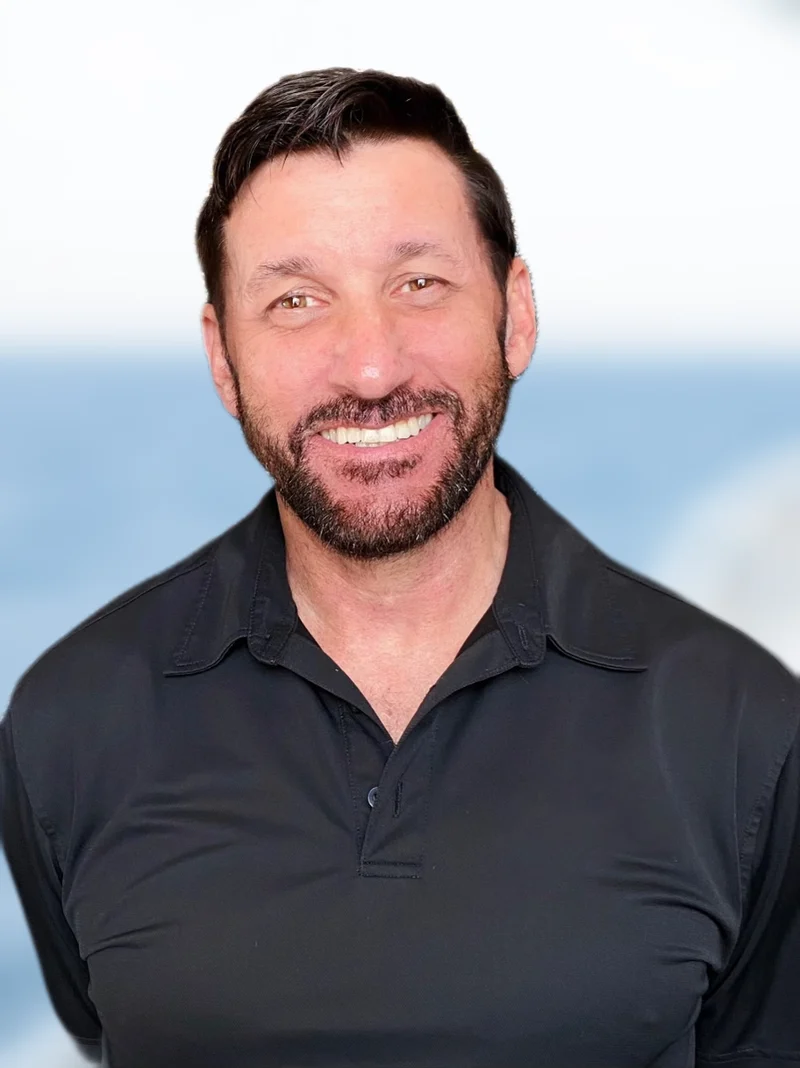
Andy Taylor
Operations, logistics and information technology
Andy Taylor is a retired U.S. Air Force Lieutenant Colonel with more than 28 years of experience in military operations and logistics, training, contract management and information and video technologies. A combat-decorated veteran, he flew missions in Desert Storm and Iraqi Freedom, and Noble Eagle combat air patrols over Washington, DC and New York City.
He served as Information Technical Lead for the AUV operations team that mapped 1,800 square miles of ocean bottom at depths beyond 1,500 metres, managing the logistics and planning of launch, recovery and sonar analysis.
After the Air Force he worked in the defense industry on budgeting, acquiring, testing and fielding advanced equipment for combat aircraft, and as a senior program manager and training consultant developing more than 75 courses. He brings proven leadership to the team’s worldwide operations and training.

Robert “RB” Havens
ROV and AUV technology director
RB Havens has more than 30 years of engineering and project management experience in marine and industrial settings, from waste-to-energy power plants to state-of-the-art marine robotics. He is proficient across power systems, hydraulic controls, steel and alloy fabrication, ship propulsion, ship and robotics navigation, and integrated computer control systems.
He has managed teams of up to 100 people and annual budgets in the tens of millions of dollars. Over the last ten years he has logged thousands of hours as lead operator and maintenance technician on offshore and inshore geophysics, inspection, and search and recovery projects using ROVs and AUVs.
Historians and research

Yutaka Iwasaki
Historian, Japanese naval advisor and translator
Yutaka Iwasaki is a naval architect, systems engineer and historian who researches U.S. submarine operations in WWII against the Japanese merchant marine and the Imperial Japanese Navy. He holds a master’s degree from Osaka University (1981) and spent eight years at the Kure shipyard, where the battleship Yamato was built.
He contributed maps and modeling to the 1999 expedition that searched for Yamato, and correctly predicted that her hull would be found broken into two or three sections. He was a major contributor to the successful USS Grunion (SS-216) expedition mounted off Kiska, Alaska by the sons of her commanding officer, Lt. Cmdr. Mannert L. Abele.
He also advised the Paul Allen expeditions that located the battleship Musashi, and contributed to the 2016 Vulcan Productions documentary about her.
The team through the years
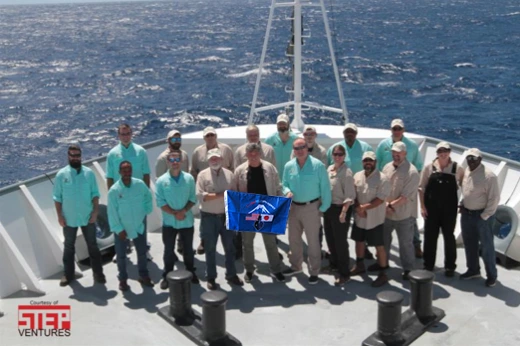
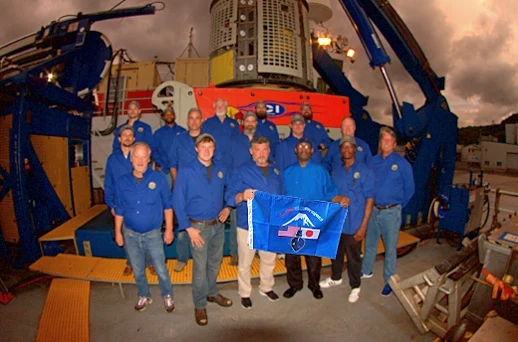
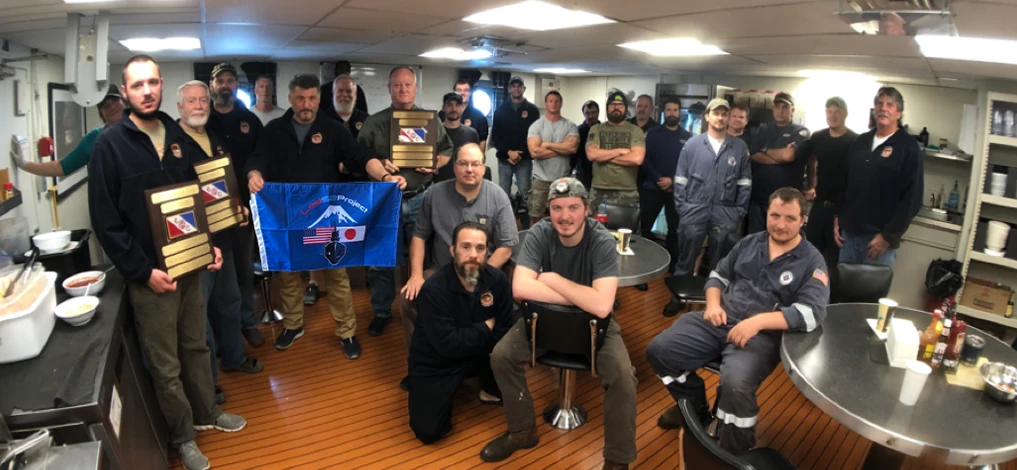
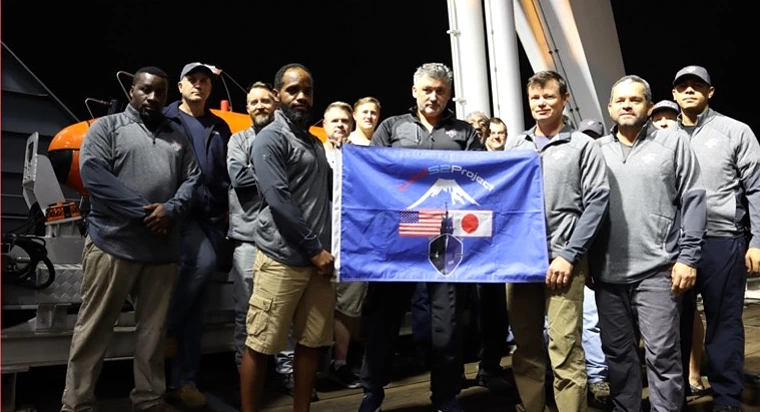
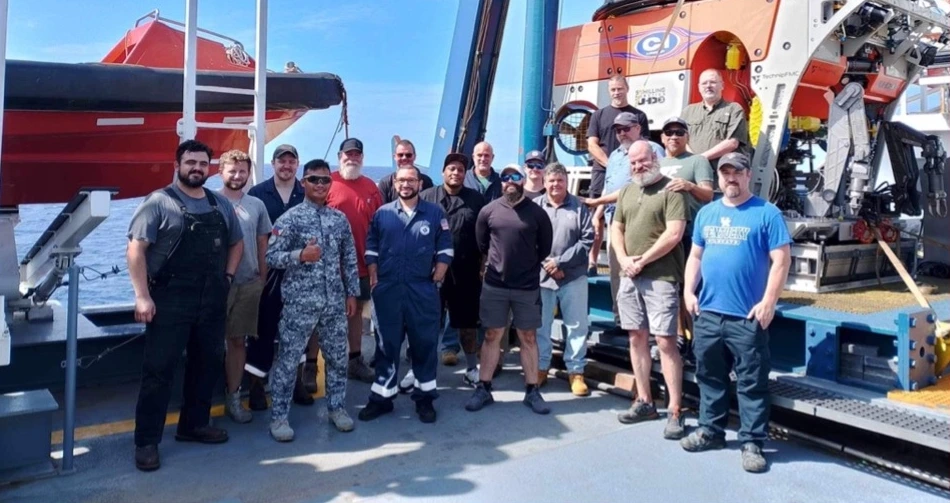
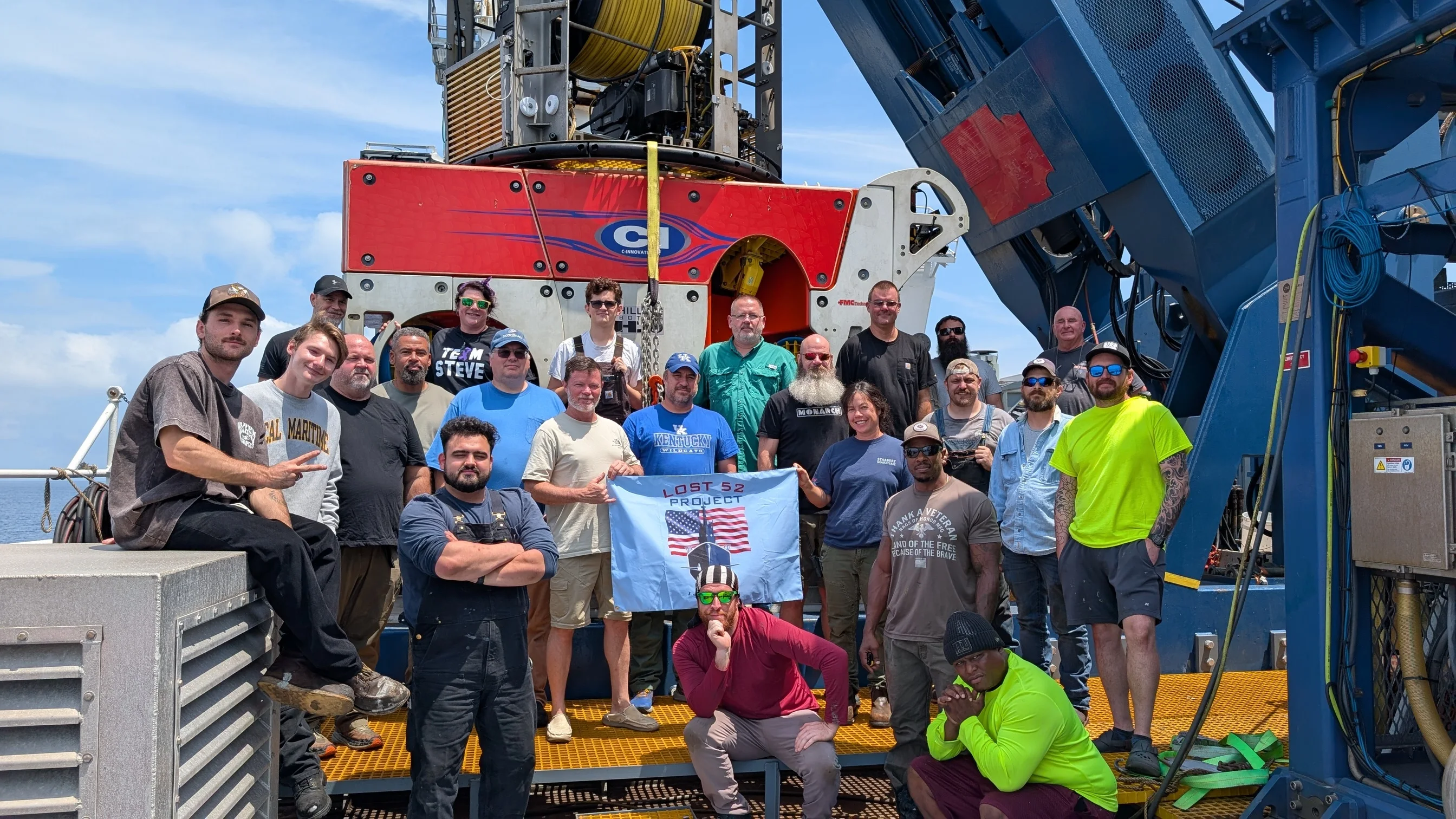
Text is taken from the Team page on the current site, lightly edited. All five portraits and and all six team photos are in place.
About
Awards
Three honors recognize the project’s work: the U.S. Navy’s highest civilian medal, the highest honor of the Navy League of Brazil, and the silver medal of the International Federation of Maritime and Naval Leagues and Associations.

Navy Distinguished Public Service Medal
U.S. Navy’s highest civilian medal · 27 May 2021 · Washington, D.C.
Ocean explorer Tim Taylor was presented the Distinguished Public Service Medal by the U.S. Secretary of the Navy in a private ceremony at the National Museum of the U.S. Navy. The award recognizes exploration, discoveries and service to the Department of the Navy that honor the Sailors and Marines who gave their lives in service to the nation.
Established in 1951, the award is presented by the Secretary of the Navy to civilians for specific acts of courage or heroism, or for service of long-term, substantial benefit to the Navy, the Marine Corps or the Department of the Navy.
For distinguished public service for the exemplary work with the Lost52 Project in locating Navy wrecks from World War II and the Cold War from December 2012 through December 2020. … Each discovery of a wreck site by the Lost52 project provided an opportunity to remember and honor the unique service of our Submariners and helped bring closure to their families and shipmates.
I am honored and proud to accept this award. It is important that we continue to honor those who made the ultimate sacrifice for our freedoms and liberties. It is the hope of me and my team that our work contributes to keeping the stories of these men and their families alive for future generations.
Earlier recipients include photographer Joe Rosenthal, Tom Hanks, Steven Spielberg, and ocean explorer Capt. Don Walsh, USN.

Brazil Navy League Medal of Honor
Grande Benemérito do Patrimônio Marítimo · Liga Marítima do Brasil
Entombed in USS R-12 are two Brazilian officers, Capitão de Corveta Alberto Gonçalves Rosauro de Almeida and Capitão de Corveta Julio Lima de Moura. They are remembered in Brazil as heroes of World War II, with a commemorative statue at submarine headquarters in Rio.
The Navy League of Brazil was established by João do Valle Rosauro de Almeida, son of one of the entombed officers, and is a member of the International Federation of Maritime and Naval Leagues (FIDALMAR), based in Madrid. The discovery of USS R-12, and the exploration and documentation that followed, earned the league’s highest honors for Tim Taylor and Christine Dennison.

FIDALMAR Medal, Silver Category
International Federation of Maritime and Naval Leagues and Associations · 19 October 2017 · Santo Domingo
On 19 October 2017, in Santo Domingo, the Governing Board of the International Federation of Maritime and Naval Leagues and Associations, known by its Spanish initials FIDALMAR, awarded Christine Dennison the Medal of the Association in its silver category. The federation, based in Madrid, brings together national maritime and naval leagues, among them the Navy League of Brazil.
The medal honors her proven maritime vocation and a collaboration that, in the words of the certificate, has always served the interests and maritime heritage of humanity. After the discovery of USS R-12, Christine Dennison and Tim Taylor set out to find the families of the men entombed in her, and she has been part of the project’s work with families ever since.
In accordance with the merits of Mrs. Christine Dennison. For her proven maritime vocation, and in recognition of the praiseworthy collaboration she has shown, which has always served the interests and maritime heritage of humanity. The Governing Board of the International Federation of Maritime and Naval Leagues and Associations is honored to award her the Medal of the Association in its silver category.

This page replaces three on the current site: Awards, the Navy award page and its duplicate, and the Brazil Navy League page. The Navy citation is shortened here; the full text can run on the finished page. The Brazilian award name and date need checking against the certificate.
About
Sponsors
The organizations that fund, equip, endorse and support the search. Each tile opens the organization’s own site in a new tab.
All twenty-two logos are in place. The fourth heading on the current page, “Funded by”, had no organization I could read under it, so it is shown empty. Source: Sponsors page on the current site.
About
Mission, team, awards, sponsors
Lost 52 Project was founded by Tim Taylor as a continuation of his first WWII submarine discovery, the USS R-12. Together with Christine Dennison he produced a 24-minute documentary on that expedition and the history of the submarine.
The team is committed to the discovery and comprehensive 3D reality-capture documentation of underwater historic sites.
Team
- Tim Taylor
- Christine Dennison
- Andy Taylor
- Robert Havens
- Yutaka Iwasaki
 Lost 52 Project ©2026